Red light therapy: a doctor’s approach
What the evidence shows and does not, how it works, whether it is safe, home device versus clinic, how I use it in clinic, and where this modern therapy meets older traditions of healing with light.
Key takeaways
- Red and near-infrared light help your cells make their own energy, move more blood and heal faster. No drugs, no ultraviolet, barely any heat.
- The honest picture is mixed overall, but strong for skin, hair, pain, fibromyalgia, cognition and recovery, promising for mood and the ageing brain, and oversold almost everywhere you look.
- It all makes more sense once you stop seeing light as just a treatment and start seeing it as a nutrient most of us no longer get enough of.
- Low-risk and cheap, but only if you actually use it, and more is not better. Buying a device? Check the wavelength, the power and the area it covers. A clinic adds assessment, wider coverage and the judgement to combine it with everything else.
- Underneath all of it sits the strangest part: why light should heal at all, and how closely the physics lines up with what ancient medicine already said.
“Everything is going to get better. I can feel it.”
My father said that while lying under red light therapy. I almost cried. The words came from somewhere deep in him, and none of us had heard that kind of conviction from him in a long time. He had flown in to see me while his mental health was slipping and his memory had started to go. Red light was one of several things I was using. Months later, he was right.
I know how that sounds. Red light therapy has become a wellness gadget, a mask you wear for better skin. But light has always been medicine. We still shine blue light on jaundiced newborns 1 and bright light on winter depression 2. Read the actual evidence and red light deserves more than a smoother complexion. I think the next era of medicine will use light seriously again, the way older traditions always did.
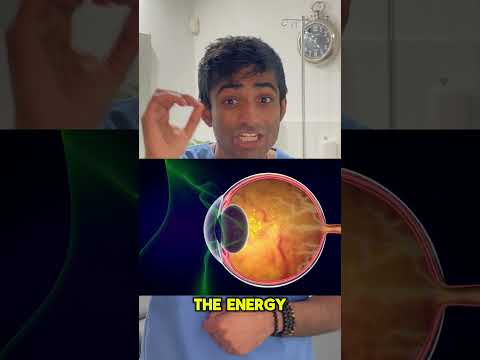
Here is what the research can measure, what Ayurveda adds, and how I actually use it. The short video above is one small piece of it: why I wear red-tinted glasses at my screen. Below, I widen the lens to the whole body.
What is red light therapy?
Red light therapy is the use of specific wavelengths of light shone onto the body, usually red at 660 and near-infrared at 850 nanometres 3. Some machines use lasers; most now use LEDs. What matters is not the light itself but what it does once it reaches your cells, and how deep it gets 4–6.
What are the benefits of red light therapy?
Start with skin, because that is where the marketing lives. In controlled trials red light thickens collagen, by around thirty per cent in one 7–9, and helps hair grow back 10–12. But skin is the least interesting part.
The same light eases muscle, joint and nerve pain 13–17, speeds recovery after hard training 18–20, and calms the mouth ulcers that chemotherapy and radiotherapy cause 21, 22. It shows real signal for cognition 23–28, for mood 29, 30, and for the ageing retina 31, 32. Earlier work hints at the heart, metabolism and lungs, though most of that is still in animals 33–38.
One honest line sits over all of it. A 2025 review of 204 randomised trials found genuine but patchy benefit: solid for a handful of uses, thin for the rest, and badly in need of better trials 39. That patchiness stopped bothering me the day I began thinking of light less as a treatment and more as a nutrient most of us no longer get enough of. More on that shortly.
How does red light therapy work?
Three things happen when red light reaches a cell.
It makes energy. The light is absorbed by an enzyme in your mitochondria, the tiny power plants inside every cell, which then produce more ATP, the fuel you run on 40–42. In a dish of muscle cells, one Harvard group measured ATP doubling or tripling after a single dose 43. In a living body it is gentler, but the idea holds: you are helping the cell recharge its own battery.
It opens the plumbing. Light nudges nitric oxide, which widens small blood vessels and brings more oxygen and nutrients to the tissue 44.
And it toughens the cell. A small dose is a mild stress, like exercise, and the cell answers by building up its own repair and defences 45, 46. Which is exactly why more is not better: past a useful dose the benefit fades, and can reverse. It also quietens inflammation, part of why tissue heals faster under it 41, 47, 48.
Red light therapy, sunlight and Ayurveda
Long before anyone measured a wavelength, people treated the sun as medicine. That instinct was not wrong.
At dawn and dusk the sun sits low, its light slanting through so much atmosphere that the blue and ultraviolet scatter away, leaving mostly red and infrared 49. That soft red morning light is, quite literally, nature’s own red light therapy, and it is roughly what a panel imitates. Midday is the opposite: full spectrum, full strength, ultraviolet at its peak 50. Ayurveda reads that fierce midday light as Pitta, the fire that digests and transforms, and tells you to eat your largest meal under it. Modern chronobiology, watching metabolism rise and fall across the day, lands in a similar place 51, 52.
We evolved inside that rhythm, days outdoors and evenings by firelight. Now we live it backwards: bright blue screens at midnight, dim grey rooms at noon 52. My suspicion is that many of us are in essence starved of the right light at the right time. So when red light helps with sleep, energy and mood, we are not adding something strange to the body. We are giving back something we took away; the same indoor life which leaves many of us low in vitamin D 53.
None of this is new. Hippocrates prescribed sunlight and built sun terraces for his patients 54. The Charaka Samhita, the founding text of Ayurvedic medicine, sets out measured sun exposure, atapa sevana, as a treatment 55. In 1903 a Danish physician won a Nobel Prize for curing a disfiguring skin tuberculosis with focused light 56, and sun cures stayed mainstream for tuberculosis until antibiotics replaced them 54.
A panel is not the sun, though. It copies one wavelength, not the whole moving spectrum, and none of the rhythm, the intensity or the simple fact of being outdoors. So the question is never just “is red light good?” It is, is this the right dose, at the right time, for this person?
Why should light heal at all?
If you have ever wondered why light should heal anything at all, here is where I land.
We already treat with energy constantly and think nothing of it. Radiotherapy is targeted radiation. Ultraviolet clears psoriasis. Magnetic pulses treat depression. Sound waves shatter kidney stones. Light belongs in that ordinary company, not in some stranger one.
Go deeper and it does get strange. Everything you are made of is atoms, and almost all of an atom’s mass is not solid matter at all. It is energy, held in a stable shape. You are, in a real way, energy wearing a shape 57. Structure alone does nothing; what moves it, what turns one thing into another, is light, the electromagnetic field acting on matter 58. Ayurveda drew the same picture in older language, calling the solid elements earth and water, and calling light and transformation Tejas, the fire of Pitta 59. The physicist John Hagelin later mapped that correspondence formally, placing the particle of light with the fire element 60. It is why I think light belongs to the future of medicine as much as its past, at the point where the newest physics and the oldest traditions quietly meet.
Red light therapy at home, or in a clinic?
For a clear, simple goal, a home device is usually enough, and I use one myself. Ignore the marketing and check three things: the wavelength (660 and 850 nanometres are the studied ones), the power actually reaching your skin at the distance you will use it (weak devices look identical and do nothing), and how large an area it covers 61. Three to five short sessions a week is the usual rhythm.
But honestly, the most important factor is whether you will actually use it. The internet is full of expensive masks worn twice and left in a drawer. A cheap device used for six weeks beats a brilliant one you never switch on. Buy one, commit to it, then judge.
A clinic adds what a device cannot: assessment, stronger and wider coverage, and the judgement to combine light with everything else, or to leave it out.
Is red light therapy safe? Side effects and cautions
For most people it is about as low-risk as medicine gets. No drugs, cheap over time, and side effects that rarely go past some warmth or redness for a day 62.
A few people should check first: if you take something that makes your skin light-sensitive, such as certain antibiotics, isotretinoin or St John’s wort 63; if you have photosensitive epilepsy; if you are pregnant; or if the skin is broken or freshly burnt. On the eyes, a red LED at sensible power is generally safe and may even help the ageing retina 31, which is why I do not wear goggles, though I will protect a patient’s eyes if there is any doubt 64.
Cancer deserves more care. The theoretical worry is that extra cellular energy could feed a tumour. In practice light is used routinely in cancer care, including for chemotherapy mouth ulcers 21, and has not been shown to promote tumours 65. Still, where there is an undiagnosed lump or a known cancer, I think it is important to weigh it out loud with the person rather than assume.
There is also the older lens. In Chinese medicine red and warmth are Yang in nature: they move Qi and blood and disperse cold and stagnation, and this is much of the logic behind pairing light with acupuncture points. Colour therapy traditions read it the same way, red warming and stimulating, blue cooling and calming 66. That same logic sets the caution. In someone already running hot, wired or inflamed, a heat or excess pattern, warming and stimulating them further does not make sense. Ayurveda reaches the same rule in its own language: do not pour more fire on Pitta.
How I use red light therapy with patients
There are studies combining acupuncture points with red light 67–71, but the combination literature is thin, and no trial is run on the person sitting in front of me. So I work from first principles: what is the mechanism, what does this particular body need, and will adding this earn its place.
I rarely use red light on its own. I reach for it most with people worn down by fatigue, poor sleep, anxiety or low mood, always as one part of a wider plan built for the person.
In a single session I might have three panels running around someone while an IV drips and electroacupuncture works, red light over whatever we most want to move. Other times I leave it out. I often warm the needles or the skin as well. Heat opens the small vessels and brings blood, oxygen and comfort to where we are working, and comfort matters more than we admit in someone who is unwell.
What shifts is not only physical. Give a depleted body more energy to work with, and the mind and the sense of self start finding their way back. You see it in small things: someone mentions they rang an old friend at the weekend, or they laugh mid-sentence for the first time since you met them. I watched the same happen with my own father. Those are the moments I do this work for.
Frequently asked questions
How much does red light therapy cost?
Professional red light therapy as an add-on costs an extra 40 euros where I work, though it may be more or less in other clinics. An at-home device can cost anywhere from 100 euros to over 3,000, depending on its size and power.
Is red light therapy worth it?
It depends on what you are using it for, and I hope this page has helped you judge. It is not the cure-all the internet promises. Matched to a specific goal with honest expectations, it earns its place.
How long and how often? Is ten minutes enough?
With most home devices, sessions last 10 to 20 minutes, three to five times a week. In clinic I vary the timing depending on the goal.
Are there side effects, and what is the real downside?
Side effects are usually mild and temporary: some warmth, redness or irritation, usually gone within a day. The bigger downsides are the cost, the discipline to keep using it, and inflated expectations.
Who should not use it, and where should you avoid it?
Check with your doctor first if you take a medicine that makes you light-sensitive, if you have photosensitive epilepsy, or if you are pregnant. Do not treat over an undiagnosed lump, a new or changing mole, or a known cancer without medical advice, and take care around the eyes at higher power.
Do you really need goggles?
At sensible power a red LED is generally safe for the eyes, and there is even evidence red light can help the ageing retina, which is why I do not always wear them. With higher-power devices, or if there is any doubt, use eye protection.
Can red light therapy cure skin cancer, such as a basal cell carcinoma?
No. Red light therapy is not a cancer treatment, and you should not use it on a suspicious skin lesion. Any new, changing or non-healing patch needs a doctor’s eyes, not a light panel. There is a separate, supervised hospital treatment called photodynamic therapy for some skin cancers, but that is a different thing altogether.
Why don’t more doctors recommend it?
Three honest reasons. Many were never taught about it; the evidence is genuinely uneven; and the wall of hype around it makes careful clinicians wary. As better trials arrive, that is slowly changing.
What is the best time of day to use it?
Morning or daytime fits the body’s own rhythm, the hours when we evolved to take in red and infrared light. I would avoid bright, stimulating sessions late at night, when the body is trying to wind down.
Where can I get red light therapy in Malta?
I use it at Serenity Holistic Medical Clinic in Swieqi, as part of a wider plan rather than on its own. There are other places in Malta that offer it too, so do your own research and find the one that fits you best.
Dr Shehan Wijesingha, MD, M.TCM, DipAP, BMedSci, CPT. Vice President, Association of Ayurvedic Professionals UK.
Medical disclaimer: This page is for educational purposes only. It is not a substitute for individual medical assessment, diagnosis, or treatment. Do not start, change, or stop any treatment, or delay urgent medical care, based on this page alone. If your symptoms are new, severe, or getting worse, contact your GP, go to an emergency department, or call the appropriate Maltese service first.
References
- Kemper AR, Newman TB, Slaughter JL, et al/. 2022. Clinical Practice Guideline Revision: Management of Hyperbilirubinemia in the Newborn Infant 35 or More Weeks of Gestation. Pediatrics
- Golden RN, et al/. 2005. The efficacy of light therapy in the treatment of mood disorders: a review and meta-analysis of the evidence. Am J Psychiatry
- Chung H, et al/. 2012. The nuts and bolts of low-level laser (light) therapy. Ann Biomed Eng
- Anderson RR, Parrish JA/. 1981. The optics of human skin. J Invest Dermatol
- Jagdeo JR, et al/. 2012. Transcranial red and near infrared light transmission in a cadaveric model. PLoS One
- Salehpour F, et al/. 2019. Penetration profiles of visible and near-infrared lasers and light-emitting diode light through the head tissues in animal and human species: a review of literature. Photobiomodul Photomed Laser Surg
- Wunsch A, Matuschka K/. 2014. A controlled trial to determine the efficacy of red and near-infrared light treatment in patient satisfaction, reduction of fine lines, wrinkles, skin roughness, and intradermal collagen density increase. Photomed Laser Surg
- Couturaud V, et al/. 2023. Reverse skin aging signs by red light photobiomodulation. Skin Res Technol
- Hernandez-Bule ML, et al/. 2024. Unlocking the power of light on the skin: a comprehensive review on photobiomodulation. Int J Mol Sci
- Gupta AK, Carviel JL/. 2021. Meta-analysis of photobiomodulation for the treatment of androgenetic alopecia. J Dermatolog Treat
- Hamblin MR/. 2019. Photobiomodulation for the management of alopecia: mechanisms of action, patient selection and perspectives. Clin Cosmet Investig Dermatol
- Torres AE, Lim HW/. 2021. Photobiomodulation for the management of hair loss. Photodermatol Photoimmunol Photomed
- Stausholm MB, et al/. 2019. Efficacy of low-level laser therapy on pain and disability in knee osteoarthritis: systematic review and meta-analysis of randomised placebo-controlled trials. BMJ Open
- Chow RT, et al/. 2009. Efficacy of low-level laser therapy in the management of neck pain: a systematic review and meta-analysis of randomised placebo or active-treatment controlled trials. Lancet
- Cheng K, et al/. 2021. Mechanisms and pathways of pain photobiomodulation: a narrative review. J Pain
- Chow RT, Armati PJ/. 2016. Photobiomodulation: implications for anesthesia and pain relief. Photomed Laser Surg
- Navarro-Ledesma S, et al/. 2023. Efficacy of photobiomodulation therapy in the treatment of pain and inflammation: a literature review. Healthcare (Basel)
- de Almeida P, et al/. 2012. Red (660 nm) and infrared (830 nm) low-level laser therapy in skeletal muscle fatigue in humans: what is better?. Lasers Med Sci
- Rossato M, et al/. 2018. Time response of photobiomodulation therapy on muscular fatigue in humans. J Strength Cond Res
- Martin-Perez IM, et al/. 2025. Effectiveness of photobiomodulation therapy in the management of fibromyalgia syndrome: a systematic review. Appl Sci
- Zadik Y, et al/. 2019. Systematic review of photobiomodulation for the management of oral mucositis in cancer patients and clinical practice guidelines. Support Care Cancer
- Oberoi S, et al/. 2014. Effect of prophylactic low level laser therapy on oral mucositis: a systematic review and meta-analysis. PLoS One
- Chun H, et al/. 2026. Home-based transcranial photobiomodulation improves cognitive function in mild cognitive impairment due to Alzheimer’s disease: a randomized, double-blind, placebo-controlled confirmatory trial. J Alzheimers Dis
- Zhu Z, et al/. 2025. Photobiomodulation effects on cognitive function: a systematic review and meta-analysis of randomized controlled trials. Lasers Med Sci
- Lee TL, et al/. 2023. Can transcranial photobiomodulation improve cognitive function? A systematic review of human studies. Ageing Res Rev
- Salehpour F, et al/. 2019. Transcranial photobiomodulation improves cognitive performance in young healthy adults: a systematic review and meta-analysis. Photobiomodul Photomed Laser Surg
- Chan AS, et al/. 2021. Photobiomodulation enhances memory processing in older adults with mild cognitive impairment: a functional near-infrared spectroscopy study. J Alzheimers Dis
- Chan AS, et al/. 2019. Photobiomodulation improves the frontal cognitive function of older adults. Int J Geriatr Psychiatry
- Ji Q, et al/. 2024. Photobiomodulation improves depression symptoms: a systematic review and meta-analysis of randomized controlled trials. Front Psychiatry
- Montazeri K, et al/. 2022. Photobiomodulation therapy in mood disorders: a systematic review. Lasers Med Sci
- Markowitz SN, et al/. 2020. A double-masked, randomized, sham-controlled, single-center study with photobiomodulation for the treatment of dry age-related macular degeneration. Retina
- Geneva II/. 2016. Photobiomodulation for the treatment of retinal diseases: a review. Int J Ophthalmol
- Syed SB, et al/. 2023. Photobiomodulation therapy mitigates cardiovascular aging and improves survival. Lasers Surg Med
- Liebert A, et al/. 2017. A role for photobiomodulation in the prevention of myocardial ischemic reperfusion injury: a systematic review and potential molecular mechanisms. Sci Rep
- Wang K, et al/. 2024. Photobiomodulation for diabetes and its complications: a review of general presentation, mechanisms and efficacy. Ann Med
- Kurhaluk N, et al/. 2026. Photobiomodulation and low-level laser therapy as complementary strategies in diabetes treatment. Int J Mol Sci
- de Souza GHM, et al/. 2020. Acute effects of photobiomodulation therapy applied to respiratory muscles of chronic obstructive pulmonary disease patients: a double-blind, randomized, placebo-controlled crossover trial. Lasers Med Sci
- Nejatifard M, et al/. 2021. Probable positive effects of the photobiomodulation as an adjunctive treatment in COVID-19: a systematic review. Cytokine
- Son Y, Lee H, Yu S, et al/. 2025. Effects of photobiomodulation on multiple health outcomes: an umbrella review of randomized clinical trials. Syst Rev
- de Freitas LF, Hamblin MR/. 2016. Proposed mechanisms of photobiomodulation or low-level light therapy. IEEE J Sel Top Quantum Electron
- Hamblin MR/. 2018. Mechanisms and mitochondrial redox signaling in photobiomodulation. Photochem Photobiol
- Karu TI/. 2010. Multiple roles of cytochrome c oxidase in mammalian cells under action of red and IR-A radiation. IUBMB Life
- Ferraresi C, et al/. 2015. Low-level laser (light) therapy increases mitochondrial membrane potential and ATP synthesis in C2C12 myotubes with a peak response at 3-6 h. Photochem Photobiol
- Keszler A, et al/. 2017. Red/near infrared light stimulates release of an endothelium dependent vasodilator and rescues vascular dysfunction in a diabetes model. Free Radic Biol Med
- Huang YY, et al/. 2009. Biphasic dose response in low level light therapy. Dose-Response
- Huang YY, et al/. 2011. Biphasic dose response in low level light therapy - an update. Dose-Response
- Al Balah OF, et al/. 2025. Immunomodulatory effects of photobiomodulation: a comprehensive review. Lasers Med Sci
- Taha N, et al/. 2024. The effects of low-level laser therapy on wound healing and pain management in skin wounds: a systematic review and meta-analysis. Cureus
- McCartney HA, Unsworth MH/. 1978. Spectral distribution of solar radiation. I: direct radiation. Q J R Meteorol Soc
- WHO, WMO, UNEP, ICNIRP/. 2002. Global solar UV index: a practical guide. World Health Organization
- Blume C, Garbazza C, Spitschan M/. 2019. Effects of light on human circadian rhythms, sleep and mood. Somnologie
- Moore-Ede M, et al/. 2023. Lights should support circadian rhythms: evidence-based scientific consensus. Front Photonics
- Amrein K, et al/. 2020. Vitamin D deficiency 2.0: an update on the current status worldwide. Eur J Clin Nutr
- Roelandts R/. 2002. The history of phototherapy: something new under the sun? J Am Acad Dermatol
- Charaka/. Charaka Samhita, Sutrasthana 22 (Langhanabrimhaniya Adhyaya): atapa among the ten methods of langhana. Caraka Samhita Online
- Nobel Prize Outreach/. The Nobel Prize in Physiology or Medicine 1903: Niels Ryberg Finsen. NobelPrize.org
- Hobson A/. 2013. There are no particles, there are only fields. Am J Phys
- Feynman RP, Leighton RB, Sands M/. The Feynman Lectures on Physics, Vol. II: Electromagnetism and Matter. California Institute of Technology
- Lad V/. 2002. Textbook of Ayurveda: fundamental principles. Ayurvedic Press
- Hagelin JS/. 1987. Is consciousness the unified field? A field theorist’s perspective. Modern Science and Vedic Science
- Zein R, Selting W, Hamblin MR/. 2018. Review of light parameters and photobiomodulation efficacy: dive into complexity. J Biomed Opt
- Glass GE/. 2021. Photobiomodulation: the clinical applications of low-level light therapy. Aesthet Surg J
- Blakely KM, Drucker AM, Rosen CF/. 2019. Drug-induced photosensitivity - an update: culprit drugs, prevention and management. Drug Saf
- ICNIRP/. 2013. ICNIRP guidelines on limits of exposure to incoherent visible and infrared radiation. Health Phys
- Glass GE/. 2023. Photobiomodulation: a systematic review of the oncologic safety of low-level light therapy for aesthetic skin rejuvenation. Aesthet Surg J
- Azeemi ST, Raza SM/. 2005. A critical analysis of chromotherapy and its scientific evolution. Evid Based Complement Alternat Med
- Law D, et al/. 2015. Laser acupuncture for treating musculoskeletal pain: a systematic review with meta-analysis. J Acupunct Meridian Stud
- Lee JS, et al/. 2022. Efficacy of invasive laser acupuncture in treating chronic non-specific low back pain: a randomized controlled trial. PLoS One
- Wu D, Zhao YL, Dai RJ, Rong PJ, Wang Y/. 2022. Application of photobiomodulation therapy in acupuncture. World J Tradit Chin Med
- Shirnasab M, et al/. 2026. Efficacy of photobiomodulation therapy on the acupuncture points on pain, maximum mouth opening, and quality of life in patients with temporomandibular joint disorders: a double-blinded randomized clinical trial. Photobiomodul Photomed Laser Surg
- Komori M, et al/. 2009. Microcirculatory responses to acupuncture stimulation and phototherapy. Anesth Analg