Acupuncture: a doctor’s approach
Acupuncture can help, often far more than many people think it can. I use advanced acupuncture in clinic, including electroacupuncture and scalp acupuncture, combining a scientific, neuro-anatomical understanding of it with the traditional thinking behind it, alongside conventional medicine and Ayurveda. Needling the body without understanding the whole pattern is how people end up with session after session and no real, lasting change.

Dr Shehan Wijesingha MD, M.TCM, BMedSci, DipAP, CPT
What ancient systems were describing
For thousands of years, Chinese medicine has worked with the idea that an intelligent life force, Qi, flows through channels called meridians, connecting organs and influencing physical and psychological wellbeing. Ayurveda has a parallel concept, prana, life force energy flowing through nadis. These were clinical frameworks, used to organise diagnosis and treatment, refined over centuries of practice.1
Acupuncture, and marma therapy, the Ayurvedic equivalent, both work by stimulating specific points along these channels to preserve or restore the free flow of this energy. For most of medical history, this was where the explanation stopped.
What modern science has begun to add is a mechanistic layer that translates these descriptions into anatomical and physiological terms most clinicians recognise.
Fascia and the body’s electrical network
The most interesting recent development in acupuncture research has been the work on fascia.
Fascia is the connective tissue that encases every nerve, muscle, and organ in the body. It was largely ignored in conventional medicine for decades, treated as inert packaging. We now know it is anything but inert. Fascia is composed largely of collagen, which has piezoelectric properties, meaning it generates electrical charge when mechanically stressed.2 This matters because the body’s processes are fundamentally electrical, from nerve impulses, to the heart’s pacemaker, to the membrane potentials that keep cells alive.
Fascia, in other words, is an electrical web that connects the entire body.
A significant finding for acupuncture came from work showing approximately 80 percent correspondence between traditional meridians and connective tissue planes. The connective tissue planes that overlap with meridians have lower electrical resistance, meaning they conduct electricity more efficiently than surrounding tissue.3 This is one plausible mechanism by which inserting needles at specific points can produce effects far beyond the local site of insertion.
Anatomical characterisation of acupuncture points has also shown distinctive features at the cellular and biophotonic levels.4 The body, viewed through this lens, looks much more like the integrated electrical network ancient medicine described, and much less like the collection of separate organs conventional medicine tends to assume.
What the clinical evidence actually shows
The evidence base for acupuncture is now broad enough to be unambiguous in several areas.
Anxiety. Multiple systematic reviews have shown that acupuncture reduces anxiety symptoms, with mechanistic evidence linking the effect to autonomic nervous system regulation.5
Depression. Systematic reviews and meta-analyses have shown meaningful improvement in depressive symptoms, with effect sizes comparable to or exceeding several pharmacological options.6
Insomnia. Meta-analyses have shown clinically meaningful improvement in sleep quality and sleep latency.7
Fibromyalgia. Meta-analyses have shown acupuncture reduces pain and improves quality of life in fibromyalgia patients, where conventional pharmacological options often reach a ceiling.8 Most people I see with fibromyalgia have been on several medications without resolution.
Chronic fatigue syndrome. A network meta-analysis has demonstrated benefit for chronic fatigue syndrome, including improvements in fatigue scores and quality of life.9
Chronic pain. A large individual patient data meta-analysis covering over 20,000 patients across multiple chronic pain conditions found acupuncture produces clinically meaningful effects beyond placebo, sustained over 12 months.10 This is one reason NICE in the UK recommends it for chronic primary pain.
Cancer-related fatigue. Effective enough that it has been integrated into many oncology supportive care protocols.11
Some people in the same setting also ask about intravenous vitamin C.
Other documented areas. Weight regulation,12 chemotherapy-induced nausea and vomiting,13 ischaemic stroke rehabilitation,14 primary dysmenorrhoea,15 menopause-related symptoms,16 and immune function.17
These are mainstream meta-analyses in mainstream journals, accumulated over the last fifteen to twenty years.
How acupuncture works mechanistically
The mechanistic picture is now well documented.
Autonomic nervous system regulation. Acupuncture modulates the autonomic nervous system, increasing parasympathetic tone, improving heart rate variability, and shifting the body out of sympathetic dominance.18 This is one of the central mechanisms by which it influences digestion, hormonal regulation, and the stress response.
Blood flow and circulation. Acupuncture stimulates nitric oxide production, which produces vasodilation and enhances circulation in the skin, muscles, and brain. Improved cerebral blood flow has been demonstrated in studies of stroke rehabilitation and cognitive recovery.19, 20
Endogenous opioids and neuropeptides. Acupuncture stimulates the release of endorphins, enkephalins, and dynorphins, alongside non-opioid compounds including serotonin, norepinephrine, oxytocin, and ATP. These contribute to pain modulation and mood regulation, and help explain why effects can be felt in parts of the body distant from the needle site.21
Anti-inflammatory effects. Acupuncture promotes anti-inflammatory cytokine production, reducing systemic inflammation in both acute and chronic conditions.21
These mechanisms are not exclusive. Acupuncture often works through several pathways at once, which is part of why it can help conditions that span more than one body system.


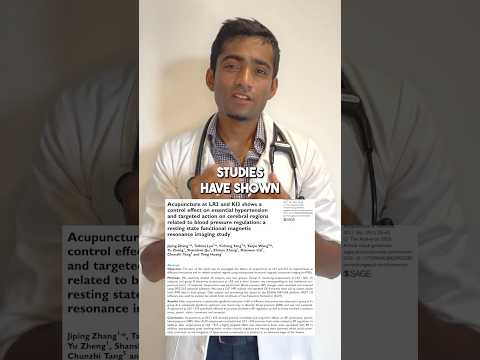

Neuroacupuncture and electroacupuncture
Two extensions of traditional acupuncture deserve specific mention, because they expand what is clinically possible.
Neuroacupuncture combines traditional acupuncture points with modern neuroanatomy and neurophysiology. It targets specific brain regions through scalp acupuncture, with research showing benefit in multiple sclerosis,22 stroke rehabilitation,23 autism spectrum disorders,24 and complex regional pain syndrome.25 The mechanism appears to involve improved cerebral blood flow, reduced neuroinflammation, and promotion of neural regeneration.26 This is a relatively new integration between Eastern technique and Western neuroscience, and the early evidence is strong enough that I expect it to become far more widely used over the next decade.
Electroacupuncture extends standard acupuncture by adding a controlled electrical current through the needles, producing deeper and more sustained stimulation. The evidence is particularly strong in chronic pain,27 inflammatory conditions,28 and neurological disorders.29 In clinic, electroacupuncture is the technique I reach for when a patient needs a deeper level of intervention than traditional acupuncture alone provides, particularly in chronic pain and nervous system dysregulation.
How I use acupuncture clinically
Acupuncture is most useful when it is chosen for the right reason.
Before needles, I review medical history, previous investigations, current medication, and red flags. Some symptoms need conventional investigation or referral first. Acupuncture is not a substitute for appropriate investigation, and it should not be used to delay necessary treatment.
I read the body through conventional medicine, Traditional Chinese Medicine, and Ayurveda together. Pulse diagnosis helps show which meridians are involved. Modern physiology helps explain which points act on which system. Ayurveda adds the marma points, which were needled in their own tradition long before the West paid attention. That combined picture decides where to needle and why, rather than simply treating the site of pain.

It can be used for local problems: pain around a joint, muscle tension, headaches, a specific area of inflammation. Its wider value is often seen in people whose symptoms involve regulation rather than one isolated structure. These are the cases where pain, sleep that does not restore, digestion including IBS-style patterns, mood, fatigue, and stress physiology are connected.
So the first question is not simply, “can acupuncture help this symptom?” The better question is, “what system is this symptom part of?”
Lower back pain may be mainly mechanical. It may also be linked to poor sleep, chronic muscle guarding, stress, inflammation, or nervous system sensitisation. Anxiety may be primarily psychological in some cases, but in others it is strongly linked to autonomic overactivation, poor sleep, gut disruption, or a body that has stayed in a protective state too long. In those cases, subconscious work may also be relevant. Fibromyalgia-type pain may sit alongside fatigue that rest does not fix, emotional depletion, or several overlapping drivers at once.
Two people may share the same symptom and need completely different treatment. That is why the diagnosis comes first, and the needles follow from it.
This is also why isolated acupuncture sessions can help some problems but barely touch others. If the wider drivers are not addressed, the effect is often temporary. When treatment sits inside a clear clinical picture, acupuncture becomes a way of influencing pain, regulation, circulation, and recovery at the same time. In the same plan I may also use electroacupuncture or scalp acupuncture where indicated, and other tools such as bodywork, cupping, red light, or personalised IV support, each chosen for the pattern rather than applied as a fixed routine. That sits inside the wider frame of integrative medicine.
If you would like to try this in clinic, feel free to
References
- The Spark in the Machine: How the Science of Acupuncture Explains the Mysteries of Western Medicine; Keown D
- Fascia research: a narrative review; Findley T et al.
- Relationship of acupuncture points and meridians to connective tissue planes; Langevin HM, Yandow JA
- Anatomic Characterization of Acupuncture System and Ultra-Weak Photon Emission; van Wijk R et al.
- Effectiveness of acupuncture on anxiety disorder: a systematic review and meta-analysis of RCTs; Yang X et al.
- Efficacy of acupuncture for depression: a systematic review and meta-analysis; Yawen T et al.
- Efficacy of Acupuncture for Insomnia: A Systematic Review and Meta-Analysis; Kim S et al.
- Acupuncture therapy for fibromyalgia: a systematic review and meta-analysis of RCTs; Zang X et al.
- Acupuncture and moxibustion for chronic fatigue syndrome: a systematic review and network meta-analysis; Fang Y et al.
- Acupuncture for chronic pain: update of an individual patient data meta-analysis; Vickers AJ et al.
- The Effects of Acupuncture on Cancer-Related Fatigue: Updated Systematic Review and Meta-Analysis; Jang A et al.
- Acupuncture on Obesity: Clinical Evidence and Possible Neuroendocrine Mechanisms; Zhang K et al.
- Prevention of chemotherapy-induced nausea and vomiting with acupuncture; Ma T et al.
- Mechanisms of Acupuncture Therapy in Ischemic Stroke Rehabilitation: A Literature Review of Basic Studies; Chavez L et al.
- The efficacy and safety of acupuncture in women with primary dysmenorrhea: A systematic review and meta-analysis; Wu H et al.
- Effects of acupuncture on menopause-related symptoms and quality of life: a meta-analysis of RCTs; Chiu H et al.
- The immunomodulatory mechanisms for acupuncture practice; Wang M et al.
- Acupuncture Effect and Central Autonomic Regulation; Li Q et al.
- Evaluation of the Effects of Acupuncture on Blood Flow in Humans with Ultrasound Color Doppler Imaging; Takayama S et al.
- The Role of Medical Acupuncture Therapy in Alzheimer’s Disease; Teja Y et al.
- Research Progress on the Mechanism of the Acupuncture Regulating Neuro-Endocrine-Immune Network System; Cui J et al.
- Treatment of Multiple Sclerosis With Chinese Scalp Acupuncture; Hao JJ et al.
- Acupuncture treatment on the motor area of the scalp for motor dysfunction in patients with ischemic stroke: study protocol for an RCT; Wang J et al.
- Scalp acupuncture treatment for children’s autism spectrum disorders; Liu C et al.
- Chinese scalp acupuncture relieves pain and restores function in complex regional pain syndrome; Hommer DH
- Neural control of cerebral blood flow: scientific basis of scalp acupuncture in treating brain diseases; Jin G et al.
- Electroacupuncture Ameliorates Chronic Inflammatory Pain-Related Anxiety; Shao F et al.
- Electroacupuncture therapy in inflammation regulation: current perspectives; Park JY, Namgung U
- Acupuncture in Neurological Disorders: An Evidence-Based Overview; Dimitrova A