Are Chakras Real? What a doctor sees in clinic
The traditional Ayurvedic map of the body overlaps with anatomy and physiology more than many people expect. I do draw on this correlation in clinic, alongside conventional medicine and Chinese medicine.
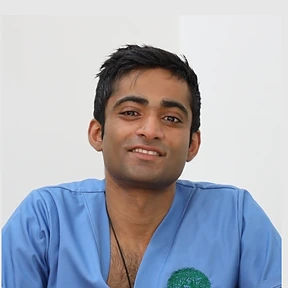
Dr Shehan Wijesingha MD, M.TCM, BMedSci, DipAP, CPT
Summary
- The classical chakra centres appear to correlate with major autonomic plexuses and endocrine hubs along the central axis of the body.
- ECG, EEG and ultra-weak photon emission show that the body does produce real fields, whilst measurement work specifically at the chakra sites is still exploratory.
- In clinic, patients often describe colour sequences that align with these classical maps whilst experiencing deep emotional shifts. That clinical pattern is one of the biggest reasons I take this framework seriously.
- In my personal opinion, bringing these patterns into public scientific debate with both clinical rigour and open curiosity could be paradigm-shifting for how healthcare thinks about the body, emotion and consciousness.
The shift in the clinic
In medicine, chakras are usually dismissed before the evidence is even discussed. I understand the reflex. I did the same.
That changed when patients began describing colours and images during treatment that I had not suggested to them.
Colours appeared as something changed emotionally within them, and it happened often enough that I could no longer file it under coincidence.
These experiences were enough to make me look properly at what ancient medical traditions were trying to map, and whether modern anatomy, interoception or autonomic physiology could explain any part of what I was seeing.
Here is what I found, and why I no longer dismiss it out of hand.
What are chakras?
The classical maps describe seven main energy centres of organised activity along the central axis of the body. In the Tantric and yogic texts these are called chakras, often rendered as “wheels”1, 2. Similar ideas of concentrated energy centres appear in Tibetan Buddhism3, in Sufism4, and in later Western esoteric writing5.
Chakras are viewed as the organs of the subtle body, intricately connected to the body’s energy channels, or nadis. These nadis can be equated to the meridians in Chinese medicine. These energy centres, or chakras, are thought to absorb and process a universal energy, prana in Ayurveda, and to act as intermediaries, transforming energy between the physical, astral and causal dimensions into forms usable by the body.
From an Ayurvedic perspective, chakras are fundamental to an understanding of holistic healing, and to understanding disruptions in our psychological and physiological states: by managing this vital energy, they influence our physical health, emotional well-being and spiritual growth. In the same way the body has physical organs, Ayurveda views the chakras as organs of the energy field, or subtle body, that surrounds us. That field can be equated to what certain scientists are now calling the biofield, or electromagnetic field, around the body16. This language can sound abstract, and I fully understand the scepticism around it. For those who are interested, I have also written about how modern physics may be describing the same reality as Ayurveda, in a different language.
Where the traditional map overlaps with anatomy
One of the parts I find hardest to dismiss, after my own research, is the anatomy. Each of the seven centres sits, more or less, over a major autonomic plexus or endocrine structure.
What I find striking is that observers working without modern dissection repeatedly located “energy centres” exactly where the body concentrates its densest autonomic wiring and its major hormone-producing glands. I now find that spatial coincidence alone is worth taking seriously, even if one remains sceptical about the metaphysical language. The short video on the right is that map in brief: the seven chakras against the nerve plexuses, acupuncture points and associated glands that sit in the same places.
The table below sets each one against its traditional colour, its nerve plexus, its associated gland, its classical acupuncture point on the Conception and Governing vessels, and what Ayurveda links to it.

| Chakra | Colour | Region | Nerve plexus or structure | Gland | TCM point | Governs (Ayurvedic) |
|---|---|---|---|---|---|---|
| Root (Muladhara) | Red | Base of the spine | Inferior hypogastric plexus6 | Adrenal glands | CV 4 | Survival, safety, physical health; imbalance shows as fear or trauma |
| Sacral (Svadhisthana) | Orange | Below the navel | Superior hypogastric plexus7 | Gonads | CV 6 | Sexual energy and emotional balance |
| Solar plexus (Manipura) | Yellow | Upper abdomen | Coeliac plexus8 | Digestive organs | CV 12 | Personal power and ambition; imbalance as stress or low self-esteem |
| Heart (Anahata) | Green | Chest | Cardiac plexus9 | Thymus | CV 17 | Love, compassion, emotional healing |
| Throat (Vishuddha) | Blue | Throat | Cervical plexus10 | Thyroid | CV 22 | Communication and self-expression |
| Brow (Ajna) | Indigo | Between the eyebrows | Pineal region11 | Pineal, pituitary | Yintang | Intuition and mental clarity |
| Crown (Sahasrara) | Violet | Top of the head | Hypothalamic region | Hypothalamus | GV 20 | Spiritual connection and integration |
What has been measured, and what remains contested
A small number of investigators have tried to record electrical or photonic activity at these same sites. Hiroshi Motoyama developed a device that measures conductivity at the classical acupuncture points and reported differences that he linked to chakra states12. Valerie Hunt, working at UCLA in the 1970s, recorded low-level electrical signals from electrodes placed over the traditional centres during deep bodywork and, with the help of an aura reader, associated particular frequency patterns with particular colours and emotional states13. Konstantin Korotkov has used gas-discharge imaging to photograph corona discharge around the body and interprets the patterns as an energy field14, 15.
The instinct to look for something physical at these sites is not as strange as it might sound. The body does produce genuinely measurable electromagnetic fields. The heart’s is recorded on an ECG, the brain’s on an EEG, and both can be detected just off the surface of the body17. Living cells also emit ultra-weak photons, and these emissions appear to carry information about metabolic state18.
From a strictly scientific perspective, I think this work is exploratory and far from conclusive. But considering what I see in clinic, which I will describe next, I think these experiments raise serious questions worth investigating with rigorous curiosity, standards and intensity.
What my patients describe
In the work I do, I often aim to reach the systems that regulate the body outside conscious awareness. In both Chinese medicine and Ayurveda, the aim is much the same: to free the flow of this subtle energy, whether we describe it as unblocking a meridian, releasing emotion held in the body, or supporting mental health more directly, so the system can regulate itself again.
It has now become very common for patients to locate an emotion as a distinct physical presence, in the chest, throat, belly or pelvis, and in various parts of the body. Many also describe feeling energy moving, or unusual sensations, as we work.
What I find interesting is that colours also appear very commonly. Red is typically associated with fear. Pink or green with a sudden sense of openness and love. Purple, white and occasionally gold with the deepest sense of peace. Two patients who had never heard of chakras both described a lotus-like image, which is striking for anyone aware of what Ayurveda has depicted for thousands of years.
One woman moved, within a single session, through red, orange, yellow, green, blue, purple and violet, the colours associated with all seven chakras. Her felt experience tracked the colours exactly, from tight fear to a quiet sense of unity. I have now seen variations of this sequence many times. It is the same sequence recorded in Hunt’s electrodes and written in the classical texts thousands of years ago.
This is part of how I work in clinic. Read the Ayurveda page next.
If you would like to see this used in treatment, feel free to
References
- Bruyere R . Wheels of Light
- Lad V . Textbook of Ayurveda: Fundamental Principles
- Cooper DJ, Lindahl JR, Palitsky R, Britton WB (2021). "Like a Vibration Cascading through the Body": Energy-Like Somatic Experiences Reported by Western Buddhist Meditators Religions.
- Selim N (2015). Sufi Body Practices and Therapeutic Politics in Berlin
- Williams PD (2008). The Chakra System and Ancient Wisdom Traditions Worldwide
- Sweta KM, Awasthi HH, Godbole A, Prajapati S (2017). Physio-anatomical resemblance of inferior hypogastric plexus with Muladhara Chakra: a cadaveric study AYU.
- Pitla NB, Deshpande PR (2017). Study of Swadhishthana Chakra and Hypogastric Plexus in View of Reproductive Activity International Journal of Science and Research.
- Sanchita, Thomas A, Simon RK, Jigisha PS (2022). Comprehensive Review on Physioanatomical Aspects of Manipura Chakra Journal of Ayurveda.
- Rokade SD . Role of Anahata Chakra and Cardiac Plexus in Cardiac Activity
- Manik RK . Neuro-anatomical and Physiological Study on Shadachakra
- Kumar R . Pineal Gland, a Spiritual Third Eye: An Odyssey of Antiquity to Modern Chronomedicine
- Motoyama H . Theories of the Chakras: Bridge to Higher Consciousness
- Hunt V, et al. . A Study of Structural Integration from Neuromuscular, Energy Field and Emotional Approaches
- Korotkov KG, et al. (2010). Application of Electrophoton Capture (EPC) Analysis Based on Gas Discharge Visualization (GDV) Technique in Medicine: A Systematic Review Journal of Alternative and Complementary Medicine.
- Owens J, van de Castle R (2004). Gas Discharge Visualization (GDV) Technique
- Rubik B, Muehsam D, Hammerschlag R, Jain S (2015). Biofield Science and Healing: History, Terminology, and Concepts Global Advances in Health and Medicine.
- Hammerschlag R, Levin M, McCraty R, et al. (2015). Biofield Physiology: A Framework for an Emerging Discipline Global Advances in Health and Medicine.
- Cifra M, Pospíšil P (2014). Ultra-weak Photon Emission from Biological Samples: Definition, Mechanisms, Properties, Detection and Applications Journal of Photochemistry and Photobiology B.