Why Massage Stops Working - and the Kind of Bodywork That Lasts
I use the thinking drawn from Ayurvedic and Chinese medical massage combined with a more modern understanding of techniques such as myofascial release, in a short, targeted way, individualised to the patient in front of me and usually combined with other treatment, with the aim of deeper and longer-lasting change.
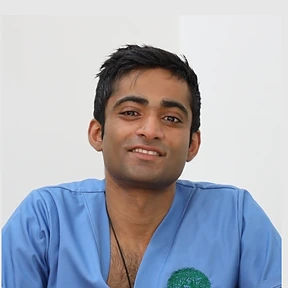
Dr Shehan Wijesingha MD, M.TCM, BMedSci, DipAP, CPT
Summary
- A massage can relieve tension without touching the pattern that created it. That is why the relief usually lasts a few days.
- There are many named types of massage. It has become more complicated than it needs to be. The human body doesn’t particularly care what name we give to a massage.
- Heat, pressure, oil, stretching, working superficially or deeply, these are tools. What matters is using the right tool for the right pattern.
- Chinese medicine and Ayurveda arrived at similar findings to different aspects of modern manual therapy: pressure points, fascial planes, direction, pressure, oil and heat. The tool is matched to the pattern.
- Instead of asking which type of massage to book, it is often more useful to ask who is actually doing it.
Listen to the signals of your body, and your own intuition, as you receive a massage.
It is normal to feel tension melting as you stop bracing, and part of you lets go. It is normal to feel change during the session. It is normal for that change to last longer than a few days to a week. And it is normal for the work to reveal itself slowly, days later.
Your body is as unique as your story. And I do think any effective therapy should reflect that.
Why massage stops working
Massage can help. But there are different types of techniques, which work through different mechanisms for different conditions, some with unique benefits.1
As a general rule, many different types can help release tension, and in 2026, I would argue that matters more than ever. And I would go as far as to say that many people benefit from having one regularly, just as many people benefit from eating well regularly, going out in nature regularly, and resting as deeply as they possibly can.
But if massage helps this much, why are its benefits so often short-lived?
A lot of people know how good a massage can feel. They feel good for two days, maybe three. They feel looser, lighter and more free in their body. But then the neck and shoulders start tightening again, the lower back becomes stiff. Soon a massage becomes a quick fix for temporary relief. Then the cost starts building up, other priorities get in the way, they stop, and their body returns to the same place it started.
This is what seems to be happening. Just like a painkiller, the symptom feels better for some time, so they feel “something is working”. But eventually, the rest of the body pulls it back to how it was before when they stop having the massage or taking the painkiller.
Could it be that the underlying pattern has not been fully addressed? Or that without addressing how a person holds, moves, compensates for and stores tension, the body eventually just contracts again to its original state?
I think what is important for deeper, longer-lasting results is understanding the underlying pattern, with the right technique, tools and sequence, tailored to it.
And even more important is for the patient to be as informed as possible of the differences between different types of massage. The more informed you are, the more confidently you can take charge of your own health.
The main types of massage
There are a large number of different types of massage, and I honestly think it has become more complicated than it needs to be. Some common examples:
- Swedish massage typically uses flowing strokes with different levels of pressure.2
- Aromatherapy massage combines massage with diluted essential oils.3
- Hot stone massage combines manual massage with local heat.4
- Deep tissue massage works progressively into deeper tissue layers.5
- Myofascial release uses sustained pressure or stretch around areas described as myofascial restrictions.6
- Manual lymphatic drainage uses much lighter, slower movements to encourage lymphatic drainage.7
There is rationale behind many of them, with research showing benefits from some of these approaches for things like anxiety, pain, stiffness, range of movement, physical function and cancer-related lymphoedema, depending on the type of massage used.1, 7–9
But at the same time, I have a different way of looking at this.
I don't think the human body particularly cares what name we give to a massage.
Heat, pressure, oil, stretching, encouraging lymphatic flow, working superficially or deeply, these are all tools that a competent massage therapist or practitioner should be able to use and adapt to the underlying pattern of the patient in front of them, using the right tool for the right pattern. That to me is crucial.
Three medical systems, the same findings
This is where Chinese medicine and Ayurveda become particularly interesting to me.
| Finding | How it shows up |
|---|---|
| Pressure points | For thousands of years, Chinese medical manual therapy, traditionally called Tui Na, has worked with acupuncture and acupressure points as part of treatment.10 Ayurvedic bodywork, traditionally called abhyanga, developed its own map of marma points,11 while Western manual therapy, typically through myofascial therapy, describes trigger points.12 To me, what matters is that medical systems developed in different parts of the world, and at different times, all recognise that certain points in the body can matter disproportionately when they are pressed or treated. I think a deep understanding of these points and their similarities matters in good manual therapy. |
| Finding | How it shows up |
|---|---|
| Fascia | Myofascial release, where people may need work around an area of fascial restriction also has an interesting parallel with Chinese and Ayurvedic bodywork. Chinese medicine describes meridians and Ayurveda describes nadis where associated pressure points lie. Modern research has found an interesting relationship between acupuncture locations and anatomical fascial planes running throughout the body13. |

| Finding | How it shows up |
|---|---|
| Direction | Manual lymphatic drainage uses very light, directional movements to encourage fluid towards functioning lymphatic pathways, and this may make sense for some people.14 Ayurveda also places importance on both the direction and pressure of massage. Pratiloma works against the direction of the hair and is traditionally more stimulating, often used where there is a more kapha dosha, which is where heaviness, stagnation, fluid and congestion can dominate the pattern. Anuloma, on the other hand, follows the natural direction of the hair and is generally more calming and grounding, particularly where vata dosha is more predominant. Different strokes and directions can be used depending on what you are trying to achieve. |
| Pressure | What seems to have been subdivided into Swedish massage and deep tissue massage, which seem to differ primarily by pressure, is typically adjusted in Ayurveda based on what the patient's pattern requires. Some people may need deeper work, some may need much lighter pressure whilst others may need deeper pressure in one area, but extremely light pressure somewhere else. More pressure is not automatically assumed to be better. |
| Herbal oils | Aromatherapy massage typically adds a diluted essential oil, such as lavender. This can make sense for the right pattern. If the aim is to calm someone, for example, lavender may make sense. But from my perspective, Ayurveda takes this individualisation considerably further. Traditional Ayurvedic herbal oils often contain formulas of multiple herbs that work in combination at a subtle level, refined over millennia, selected according to the person's constitution and current imbalance, as opposed to a single oil because it smells relaxing.15 Mahanarayan Oil for example, is a famous Ayurvedic Oil I use for individuals to pacify Vata imbalance. And it is a synergistic formulation of over 30 herbs, classically described as strength promoting, tissue building and anti-inflammatory.16 |
| Heat | Hot stone massage adds heat, and again, this can make sense for the right pattern. If someone is already excessively hot, however, adding more heat may make much less sense, particularly where Chinese medicine or Ayurveda would describe an excess-heat pattern. In Ayurveda, heat can be added where appropriate through swedana, or therapeutic steam.17 From a modern physiological perspective, heat raises skin temperature, increases blood flow and induces sweating.4 And from an Ayurvedic lens, the steam is additionally used to mobilise ama - traditionally understood as metabolic waste, and prepare it for elimination.18 Just like the oil, pressure and direction, the use of steam or heat is matched to the person and is not used for everybody. |
So which type is best?
You walk into a spa or hotel and see Swedish massage, deep tissue massage, aromatherapy massage, hot stone massage, myofascial release and lymphatic drainage, each with a two-line explanation underneath it.
How are you genuinely meant to know which one will best help you?
Instead of asking “Which type of massage should I book?”, I think it could be useful to ask who is actually doing it.
These are the questions I would use, on any practitioner you are considering, including me.
- Do they assess you before they treat you? Assessment means working out how you hold and move before anyone touches you. Do they regularly work with the problem you have?
- Can they explain why? Why they are choosing lighter or deeper pressure, heat, a particular oil, full-body work or something much more targeted. Any good, experienced manual therapist should be able to explain what they are doing, why they are doing it, and what they realistically expect it to achieve.
- Can they adapt during the session? Your body responds to the work as it happens, and someone with enough understanding and skill will change what they are doing according to that response.
- Look beyond the stars in their reviews. What do people repeatedly say about them? Do the reviews sound genuine? Do people describe being listened to, having the treatment adapted to them and getting help with problems similar to yours?
- Assess the result for yourself. Not only how relaxed you feel when you walk out, but whether the thing you went in for actually changes, and how your body feels over the days that follow.
To me, that tells you far more than the name written on the treatment menu.
The massages that hold are the ones matched to the pattern, by someone who understood the pattern first.
How I use massage
If what you want is sixty to ninety minutes of an uninterrupted massage, there are excellent spas and massage therapists in Malta who specialise in many of the therapies above. For many people, I think it would genuinely be a good idea to try and experience it with the right therapist.
I personally tend to use bodywork in a much shorter, more targeted way, typically for someone with a long-standing health concern. Often these are patients where massage, acupuncture, psychology or conventional medical care haven’t given them the results they are looking for. In those situations, I tend to take a more integrated approach, using a combination of modalities deeply personalised to the person’s pattern and in the right sequence with the aim of creating deeper, longer-lasting change.
Bodywork is therefore rarely the whole plan and may typically sit alongside other modalities such as various forms of acupuncture, subconscious and mind-body work, IV drips, herbs and supplements and nutrition. During the bodywork itself, I may often combine many of the principles discussed above according to the person in front of me. This can mean adjusting the direction, pressure and depth of the work in real time, using the patient’s breath to help the body let go, choosing the appropriate herbal oil, and using heat, red light therapy, herbal steam or cupping where indicated.
Some patients describe feeling the muscle almost melting underneath the skin as they stop bracing and let go. Some feel the urge to laugh or cry. For others, memories surface. Others sometimes describe the feeling of energy moving in the body or random sensations in parts of the body not being stimulated.
What seems to be best for patients is to listen to your body and intuition, let thoughts and feelings come and go and let the mind and body release anything it may need to at its own pace.
Finally, there is a Sanskrit word I particularly like: sneha. It means oil, but it also means love, affection and tenderness. Whatever framework you use, I think that is a beautiful reminder of what good bodywork should ultimately feel like.
If you would like to try this in clinic, feel free to
References
- Mak S, Allen J, Begashaw M, et al. Use of massage therapy for pain, 2018-2023: a systematic review. JAMA Netw Open. 2024;7(7):e2422259.
- Rapaport MH, Schettler P, Breese C. A preliminary study of the effects of a single session of Swedish massage on hypothalamic-pituitary-adrenal and immune function in normal individuals. J Altern Complement Med. 2010;16(10):1079-1088.
- Lakhan SE, Sheafer H, Tepper D. The effectiveness of aromatherapy in reducing pain: a systematic review and meta-analysis. Pain Res Treat. 2016;2016:8158693.
- Heinonen I, Laukkanen JA. Effects of heat and cold on health, with special reference to Finnish sauna bathing. Am J Physiol Regul Integr Comp Physiol. 2018;314(5):R629-R638.
- Majchrzycki M, Kocur P, Kotwicki T. Deep tissue massage and nonsteroidal anti-inflammatory drugs for low back pain: a prospective randomized trial. ScientificWorldJournal. 2014;2014:287597.
- Ajimsha MS, Al-Mudahka NR, Al-Madzhar JA. Effectiveness of myofascial release: systematic review of randomized controlled trials. J Bodyw Mov Ther. 2015;19(1):102-112.
- Ezzo J, Manheimer E, McNeely ML, et al. Manual lymphatic drainage for lymphedema following breast cancer treatment. Cochrane Database Syst Rev. 2015;2015(5):CD003475.
- Moyer CA, Rounds J, Hannum JW. A meta-analysis of massage therapy research. Psychol Bull. 2004;130(1):3-18.
- Guo J, Li L, Gong Y, et al. Massage alleviates delayed onset muscle soreness after strenuous exercise: a systematic review and meta-analysis. Front Physiol. 2017;8:747.
- Liu L, Huang J, Li T, et al. Efficacy and safety of Tuina (Chinese therapeutic massage) for chronic ankle instability: a systematic review and meta-analysis of randomized controlled trials. PLoS One. 2025;20(6):e0321771.
- Wu T, Wang XY. A comparative study on marma and acupoints. J Ayurveda Integr Med. 2023;14(4):100769.
- Melzack R, Stillwell DM, Fox EJ. Trigger points and acupuncture points for pain: correlations and implications. Pain. 1977;3(1):3-23.
- Langevin HM, Yandow JA. Relationship of acupuncture points and meridians to connective tissue planes. Anat Rec. 2002;269(6):257-265.
- Thompson B, Gaitatzis K, Janse de Jonge X, Blackwell R, Koelmeyer LA. Manual lymphatic drainage treatment for lymphedema: a systematic review of the literature. J Cancer Surviv. 2021;15(2):244-258.
- Basler AJ. Pilot study investigating the effects of Ayurvedic Abhyanga massage on subjective stress experience. J Altern Complement Med. 2011;17(5):435-440.
- The Ayurvedic Formulary of India, Part I. 2nd revised English edition. New Delhi: Government of India, Ministry of Health and Family Welfare, Department of Indian Systems of Medicine and Homoeopathy; 2003. ISBN 8190115146. Taila (medicated oils).
- Mangal G, Lamichhane S, Garg G, Adhikari P, Narine A. Therapeutic insights into Nadi Swedana: traditional practice and modern perspectives. Int J Ayurveda360. 2025;1(6):464-474.
- Ram Manohar P. Critical review and validation of the concept of Āma. Anc Sci Life. 2012;32(2):67-68.
- Monteiro Rodrigues L, Rocha C, Ferreira HT, Silva HN. Lower limb massage in humans increases local perfusion and impacts systemic hemodynamics. J Appl Physiol. 2020;128(5):1217-1226.
- Franklin NC, Ali MM, Robinson AT, Norkeviciute E, Phillips SA. Massage therapy restores peripheral vascular function after exertion. Arch Phys Med Rehabil. 2014;95(6):1127-1134.