Ayurveda in Malta: a doctor’s clinical approach
I use the diagnostic and treatment logic of Ayurveda with every patient I see, alongside conventional medicine and Chinese medicine. Ayurveda has been mapping patterns in the body for thousands of years, some of which modern research is only now beginning to explain. To become more informed and start taking charge of your own health, feel free to read why Ayurveda will shape the future of medicine and whether Ayurveda is scientific.
Find out your Ayurvedic constitution
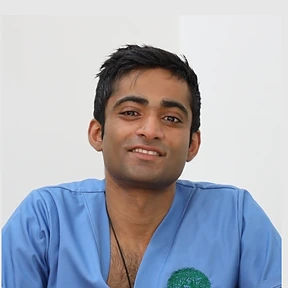
Dr Shehan Wijesingha MD, M.TCM, BMedSci, DipAP, CPT
What Ayurveda actually is
The word “Ayurveda” comes from two Sanskrit words: “ayus”, meaning life, and “veda”, meaning knowledge or science. It is commonly translated as “the science of life.”
Ayurveda looks at the whole person: body, mind, digestion, sleep, stress, lifestyle, constitution, environment and daily rhythm. Physical and mental health are treated as parts of the same pattern.
Rather than treating symptoms as isolated problems, Ayurveda asks a deeper question:
What pattern has moved this person away from balance?

That pattern may involve digestion, stress, sleep, unsuitable food, emotional strain, overwork, seasonal change, trauma, ageing, or lifestyle habits that no longer suit the person’s constitution.
Once the pattern is understood, care can be personalised using nutrition, herbs, spices, oils, massage, cupping, cleansing methods, yoga, meditation, breathwork, and lifestyle changes. The tools are not the main point. The real strength of Ayurveda is that it helps a person understand themselves more clearly and choose the kind of care their body and mind actually need.
Ayurveda is as concerned with preventing imbalance before it takes hold as with treating illness once it has. Health is not only the absence of disease. It is a state of better balance, resilience, digestion, energy, clarity, rhythm, and connection between body and mind.
Modern healthcare is very good at many things: emergencies, surgery, diagnosis, medication, imaging, blood testing, monitoring, and specialist care. These are essential. But many people with chronic symptoms fall into a different category. Their tests may look normal, or only partly explain what they feel. They may have fatigue that rest barely touches, poor sleep, gut symptoms that tighten into food rules, anxiety, widespread pain, brain fog, skin flares, hormonal changes, stress overload, or a general sense that something is not right.
In these situations, the issue is often not one isolated symptom. It is the wider pattern.
Ayurveda pays attention to the foundations that shape health every day: food, digestion, rhythm, sleep, stress, emotional state, season, constitution, and lifestyle. It gives language to subtle changes before they become more serious. It helps people notice when their body is whispering, not only when it is shouting.
A meal should nourish you. It should help you feel steadier, clearer, and more capable of living your day. If you regularly feel heavy, dull, bloated, foggy, sleepy, acidic, wired, or unsettled after eating, Ayurveda would not ignore that. It would ask what your body is trying to show you. But food alone doesn’t rebuild everything the body loses over time. For that, Ayurveda has always relied on rasayanas, rejuvenative substances meant to restore strength and resilience at a deeper level.

That is one of Ayurveda’s strengths. It teaches people to listen earlier, understand patterns more deeply, and make practical changes before imbalance becomes more established.
In my practice, this sits inside integrative medicine: natural treatment used where it genuinely helps, with conventional diagnosis and safety kept alongside it. Food, herbs, oils, spices, self-care, breathing, meditation, movement, and lifestyle changes should be chosen according to the person’s constitution, symptoms, medical context, and current state. The aim is not simply to add more natural remedies. The aim is to restore balance intelligently.
Constitution, inner balance, and the doshas
Just as every person has a unique fingerprint, Ayurveda teaches that each person has a unique constitution. This is their natural pattern of body, mind, digestion, emotions, energy, and tendencies.
In Ayurveda, this constitution is understood through the three doshas: Vata, Pitta, and Kapha. These are not rigid personality types. They are patterns of function that describe how different qualities show up in the body and mind.
Your underlying constitution remains your natural pattern, but your current state can move away from balance. Stress, unsuitable food, poor sleep, seasonal changes, emotional strain, trauma, overwork, ageing, and daily habits can all disturb that balance. Over time, these disturbances may show up as symptoms.
Every person has all three doshas, but usually in different proportions. One person may naturally have more Vata, another more Pitta, another more Kapha. When we understand the doshas, we can begin to see why the same symptom may have different causes in different people, and why the same treatment does not suit everyone. Modern findings show constitution-associated signatures in genome-wide SNP analysis 1, DNA methylation patterns 2, and gut and oral microbiome composition 3.
A brief enquiry to check fit and safety
What follows is a brief overview of each. The fuller picture, and how it applies to you specifically, is what a consultation is for.
Vata: movement, sensitivity, and irregularity
Vata is the principle of movement. It governs breath, circulation, nerve impulses, elimination, thoughts, speech, and attention. It is dry, light, cold, mobile, subtle, and irregular.
One of the most striking modern findings about Vata seems to correlate with exactly what the classical texts describe: how the system behaves under challenge. When healthy volunteers were tilted head-up and their heart-rate variability measured, Vata-predominant individuals showed the largest fall in parasympathetic indices 4. In plain terms, they met that challenge by over-recruiting the stress response rather than adapting smoothly. That is the physiological shape of irregularity.
In the body, Vata may show up as dry skin, cracking joints, bloating, constipation, cold hands and feet, a lighter frame, or difficulty gaining weight. In the mind, it may show up as fast thinking, restlessness, variable focus, or difficulty sitting still.
This seems to correlate with Vata individuals carrying the lowest weight, BMI, body-fat percentage and fat mass of the three types on bioimpedance measurement 5. Platelet aggregation runs highest where Vata and Pitta are the two leading doshas, with those individuals responding better to a lower dose of aspirin 6. Gene-expression work at the extremes of each type found Vata enriched for coagulation, blood-cell formation and biological ageing 7, which is the molecular echo of a description written 5,000 years earlier.
When balanced, Vata gives creativity, enthusiasm, sensitivity, and adaptability. When aggravated, it may become anxiety, insomnia, scattered attention, tension, fatigue, and a feeling of being ungrounded.
Vata tends to increase with irregular routines, travel, overstimulation, poor sleep, cold weather, cold or raw foods, stress, and seasonal change. Ayurveda supports Vata through warmth, routine, grounding, rest, cooked nourishing food, oil, and steadiness.

Pitta: transformation, heat, and intensity
Pitta is the principle of transformation and metabolism. It is closely related to the fire element and is hot, sharp, light, sour, pungent, and penetrating.
In the body, Pitta may show up as warmth, strong appetite, focused digestion, a tendency toward redness, acidity, heartburn, inflammation, or skin sensitivity. In the mind, it may show up as intelligence, focus, ambition, discipline, and a need to understand things properly.
From a modern perspective, Pitta sits between Vata and Kapha on weight, BMI and body composition 5. Gene-expression profiling found Pitta enriched for immune and inflammatory pathways 7, with extensive-metaboliser CYP2C19 genotypes predominating in Pitta, at 91 per cent 8.
When balanced, Pitta gives clarity, courage, leadership, precision, and good decision-making. When aggravated, it may become irritability, impatience, perfectionism, criticism, inflammation, skin flares, and overdrive.
Pitta tends to increase with heat, summer, strong sun, overwork, intense competition, alcohol, and excess spicy or acidic foods. Ayurveda supports Pitta through cooling foods, gentler routines, emotional spaciousness, and reducing excess heat, pressure, and stimulation.
Kapha: structure, stability, and nourishment
Kapha is the principle of structure, lubrication, immunity, and stability. It is associated with the Earth and Water elements and is heavy, slow, cool, soft, dense, stable, and moist.
In the body, Kapha may show up as a stronger frame, steady stamina, deep sleep, slower digestion, a tendency to gain weight more easily, water retention, congestion, or heaviness. In the mind, it may show up as calmness, patience, loyalty, and groundedness.
From a modern perspective, on bioimpedance and standard somatotyping, Kapha individuals had significantly higher weight, BMI, body-fat percentage and fat mass than the other two types on every parameter except height 5. Gene-expression profiling found Kapha enriched for anabolic and storage processes 7, with poor-metaboliser genotypes most common in Kapha 8.
When balanced, Kapha gives endurance, compassion, strength, resilience, and steadiness. When aggravated, it may become lethargy, low motivation, emotional heaviness, attachment, congestion, or stagnation.
Kapha tends to increase in colder, damp seasons, with rich heavy foods, and with a lack of movement. Ayurveda supports Kapha through warmth, lightness, movement, stimulation, variety, and lighter foods with more pungent, bitter, and astringent qualities.
Most people are not just one dosha
In real life, most people are not purely Vata, Pitta, or Kapha. They are a unique combination.
Someone may have a Vata constitution but a Pitta imbalance. Another person may have strong Kapha physically, but become Vata-aggravated through stress, poor sleep, travel, and irregular meals.
This is why Ayurvedic care should not be reduced to a quick quiz. A dosha quiz may be interesting, but it cannot replace a proper consultation.
The question is not simply: “What dosha am I?”
The better question is:
What is my natural constitution, what is my current imbalance, and what is the right next step for my body and mind now?
Ayurveda, digestion, stress, and mental health
Ayurveda has always understood that the mind and body influence each other, including the deeper layers of mind.
In modern language, we might speak about stress physiology, the nervous system, sleep, digestion, inflammation, gut-brain communication, trauma, burnout, or emotional regulation. Ayurveda uses a different language, but it is often looking at the same human reality: the body and mind are not separate.
For many people, mental health is rarely only mental. By the time they seek help, anxiety, low mood, burnout, or overwhelm may also appear with poor sleep, fatigue, gut symptoms, brain fog, tension, pain, emotional reactivity, or a sense that the body is stuck in survival mode.
Ayurveda helps by asking what is destabilising the system. Is the person depleted and ungrounded? Overheated and overdriven? Heavy, stagnant, and stuck? Are meals irregular? Is sleep poor? Is digestion weak? Is the person living in a way that constantly pushes against their constitution?
This does not replace appropriate mental health care. But it can add an important whole-person lens, especially when stress, sleep, digestion, lifestyle, and nervous-system regulation are part of the pattern.

How an Ayurvedic consultation works in clinic
Before any Ayurvedic recommendation is made, I review the medical context. That means previous blood tests and investigations, current medication, ongoing diagnoses, surgical history, and red flags. Some symptoms need conventional investigation or a specialist before anything else. Some herbs interact with prescription medication, including antidepressants, anticoagulants, blood pressure, diabetes, and thyroid medication, so these are checked carefully first.
From there, the consultation looks at how your system is actually functioning. Main symptoms and how they developed over time, digestion, appetite, sleep, energy, stress, mood, skin, pain, diet, daily routine, emotional strain, hormonal rhythm, and life context. Where relevant, I use pulse diagnosis and physical examination through both Ayurvedic and Chinese medicine frameworks.
Only then do I work out where Ayurveda is the right lens, where conventional medicine is, and where Traditional Chinese Medicine is. Most plans use more than one.
The plan itself may include personalised food guidance, daily rhythm and lifestyle changes, herbs or spices where appropriate, sleep and routine support, breathing or meditation, guidance on what to avoid for your constitution, and any further investigation or referral that is needed. Each plan is built for the person in front of me.
Ayurveda looks at the person, the pattern, and the context. Two people may both have fatigue and need completely different care. One may need grounding and nourishment. Another may need cooling and less intensity. Another may need stimulation, movement, and lighter food. Another may need medical investigation before anything else. The same is true for stress and mental health, skin, hormonal rhythm, congestion, and long-term resilience: the label does not decide the plan. The constitution and current imbalance do.
Ayurveda can be very powerful. I think it becomes more powerful when it is combined with the most up to date science and other ancient practices, which is the approach I take. Chronic symptoms often sit at the meeting point of physiology, stress, digestion, sleep, environment, and history, and each system can genuinely help read part of the picture.
For more on how I actually combine these three lenses, feel free to read how treatment works.
Where I think this is going
From my perspective, Ayurveda will shape the future of medicine. That is not only because of the results I see in patients. I have gone into some depth on whether Ayurveda is scientific, and what quantum physics could reveal about healing, and on whether chakras map onto anything the body actually shows in clinic. These are genuinely difficult questions about the reality underneath all of this.
I am convinced that the depth behind these older medical systems is only starting to be integrated in the way it should be, and it makes me wonder how much faster medicine could advance if we started rigorously studying what isn't visible.
If you would like to try this in clinic, feel free to
References
- Genome-wide analysis correlates Ayurveda Prakriti; Govindaraj P, Nizamuddin S, Sharath A, et al.
- DNA methylation analysis of phenotype specific stratified Indian population; Rotti H, Mallya S, Kabekkodu SP, et al.
- Exploring the signature gut and oral microbiome in individuals of specific Ayurveda prakriti; Shalini TV, Jnana A, Sriranjini SJ, et al.
- Heart rate variability during head-up tilt shows inter-individual differences among healthy individuals of extreme Prakriti types; Rani R, Rengarajan P, Sethi T, et al.
- Correlation of body composition parameters and anthropometric somatotypes with Prakriti body types among the Meitei adults of Manipur, India; Konjengbam H, Leona Devi Y, Meitei SY
- Prakriti and variations in platelet aggregation; Bhalerao S, Deshpande T, Thatte U
- Whole genome expression and biochemical correlates of extreme constitutional types defined in Ayurveda; Prasher B, Negi S, Aggarwal S, et al.
- Traditional medicine to modern pharmacogenomics: Ayurveda Prakriti type and CYP2C19 gene polymorphism associated with the metabolic variability; Ghodke Y, Joshi K, Patwardhan B