Why Ayurveda will shape the future of medicine: a doctor's perspective
Ayurveda already shapes my clinical practice with every patient I see, alongside conventional medicine and Chinese medicine, and I strongly believe the rest of medicine is heading the same way: towards connecting different ways of understanding the same person. This essay sets out why. To become more informed, feel free to also read whether Ayurveda is scientific and how I use Ayurveda in clinic.
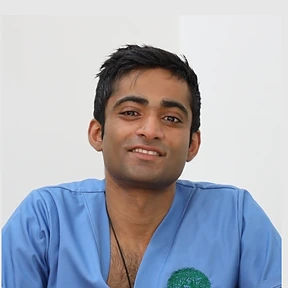
Dr Shehan Wijesingha MD, M.TCM, BMedSci, DipAP, CPT
Summary
- Conventional medicine is excellent at acute care. Heart attacks, fractures, infections, escalation, safety. This is not where the gap is.
- The gap is chronic, multi-system disease. Fatigue, IBS, fibromyalgia, anxiety, perimenopause and the wider patterns where no single specialty owns the picture.
- Ayurveda has been working clinically with these patterns for thousands of years. Personalised, root-cause, mind-body-spirit as one system rather than three departments.
- Modern science is increasingly mapping onto what Ayurveda has long described. Pharmacogenomics, the microbiome, the autonomic nervous system, the biofield, the inflammation–mood axis.
- The future of medicine is not Western or Eastern. It is integrative. Used in the right order, for the right patient, by a clinician trained to do both.
Working in conventional medicine across multiple specialties, I have seen how powerful it can be. Heart attacks managed in real time. Fractures repaired. Acute infections treated before they become life-threatening. The system was built for these things, and it does them really well.
But I noticed something else. As doctors, when patients arrived with chronic, multi-system problems that did not fit neatly into one specialty, we tended to default to quick fixes. A medication for the symptom. Another medication for the next symptom. Years later, the same patient would still be there, still on medications, often with no real explanation for what was actually happening.
This is not just my observation. The global rise in patients seeking complementary and integrative practitioners reflects something larger. People want to be looked at as a whole person, not a sum of separate symptoms managed by separate specialists. They want the mind, body and spirit treated as one connected system, not three departments.
This piece is about why Ayurveda, the world’s oldest continuously practised medical system, has been doing exactly that for thousands of years. And why I believe it will increasingly shape the future of medicine.
Where conventional medicine has reached its limits
The 1910 Flexner Report fundamentally reshaped medical education. Over the following decades, training shifted toward a more technical, symptom-focused model, and the role of the physician narrowed. Doctors, once seen as holistic healers, increasingly became technicians treating discrete diseases.
I could see this when I was consulting patients myself. So much of the work was patient notes, red flags, computer entries, paperwork. By the time I had ruled out the emergency and finished the documentation, the appointment was over. This is simply the model I was working within. It leaves very little room to look at the body as the dynamic, interconnected system it actually is.
I was never really taught to do that either. Conventional medical training looks at the body as a machine made of separate parts. The heart is a pump. The kidney is a filter. The gut is a tube. This view, rooted in Newtonian physics, defines health largely as the absence of disease, and tends to miss the deeper patterns that drive chronic illness.
Modern medicine also faces well documented structural challenges. Adverse drug reactions account for an estimated 5 to 10 percent of hospital admissions, and iatrogenic harm is increasingly recognised as a meaningful contributor to global morbidity 1, 2. The structure of how research is funded and published has, at times, narrowed which questions get asked and which findings reach clinicians 3, 4. Senior editors at major medical journals have written publicly about concerns regarding the reliability of published research and the gap between evidence and routine practice 5, 6.
This shows the model has limits. The person who experiences these limits most directly is the patient.
Why complex chronic conditions are often poorly served
Most healthcare spending and clinical attention is directed at managing 15 to 25 chronic conditions that drive the majority of disability and premature death 7. Patients with complex, multi-system presentations are often poorly served, because the conventional model struggles to identify a single structural or biochemical cause.
When investigations come back normal, symptoms can be dismissed or attributed to psychiatric origin. Patients are left feeling unheard, often spending years searching for an explanation 8. Many of these patients have already had their tests come back normal while their symptoms persist. The same pattern shows up across anxiety, fibromyalgia, chronic fatigue, and irritable bowel symptoms. Different presentations. Often the same underlying problem: a system in protection that no single specialty fully owns.
Preventive care, arguably the most important lever for long-term health, also remains underused. The evidence supports its cost-effectiveness and long-term benefits 9. Yet conventional medicine struggles to reverse the major chronic diseases that increasingly drive premature illness and death 10. Public guidance on diet, exercise, fats and supplementation has shifted repeatedly over the decades, contributing to genuine confusion about how to live well 11.
The result is a system that excels at acute care but does not yet offer most patients with chronic conditions a coherent path forward.
What Ayurveda has been doing for thousands of years
Ayurveda is the oldest continuously practised system of medicine, with a clinical tradition spanning thousands of years. It starts from a different place. Treat the underlying pattern, not the surface symptom. Address imbalance before it becomes named disease. Recognise that body, mind and spirit are not separate departments, including the deeper layers of mind outside conscious awareness.
Personalisation has always been built in. Through the concept of prakriti, an individual’s constitution, Ayurveda has been doing what modern medicine now calls personalised care for thousands of years. Prakriti describes how a person responds to their environment, their food, their stress, and their treatment. Two patients with the same condition often need different approaches, because their underlying constitutions are different. This is not a vague statement. It is a specific clinical framework, refined over millennia.
And what I personally find most interesting is how Ayurveda’s map of reality seems to be increasingly converging with some of the most up to date modern physics.
The approach is also pragmatic. Real food. Real lifestyle adjustments. Herbal remedies that have been in use for thousands of years and tend to carry favourable side-effect profiles compared to many modern medications 12–14. Subtle imbalances picked up before they become named disease 15, 16.
Modern science is increasingly mapping onto what Ayurveda has long described.
Studies linking specific genetic markers to prakriti types have shown clear patterns. People with a Kapha constitution show genes associated with metabolic regulation. Those with Vata traits may carry higher risk for neurodegenerative conditions 17–19. This is the same territory pharmacogenomics is now investigating, often using more recent vocabulary for ideas Ayurveda described in Sanskrit centuries ago 20, 21.
Recent work on the microbiome has begun to align with how Ayurveda has long thought about agni, digestive fire, and the gut as central to overall health 22. The conversation about the autonomic nervous system, vagal tone, and the body’s stress response is not new in clinical terms. It is just the modern map for what Ayurveda has been working with through prana vata and the disturbance patterns that follow 23–25.
Ideas that, until recently, sat outside the conventional model are now being investigated through frameworks like the biofield, biophotons, the classical chakra maps, and quantum information flow 26, 27. Whether or not the language is familiar to a Western-trained clinician, the territory being mapped looks very similar.
I do not think this is coincidence. I think it is what happens when two different traditions, working over very different timescales, observe the same human body.
Why the future of medicine is integrative
The most interesting developments in medicine right now are not happening inside any single specialty. They are happening at the boundaries.
Pharmacogenomics is changing how medications are prescribed by accounting for individual genetic variation. Microbiome research is changing how we think about gut, immunity, mood, and metabolism as one system. Functional and lifestyle medicine are putting nutrition, sleep, and stress where they belong in chronic disease care. Mind-body research is documenting what experienced clinicians have been describing for years.
These developments share a common direction. Move away from the one-size-fits-all model. Treat the patient, not the diagnosis. Recognise that the body is more interconnected than the specialty model suggests.
This direction is exactly where Ayurveda has been for thousands of years.
That is the part I find clinically interesting. In many areas, modern science seems to be catching up to Ayurveda, often with different language. The deeper integration is starting to happen on its own.
The question for medicine over the next decade as this integration happens will be whether it is done well, with proper clinical thinking, or whether it is diluted into generic wellness that lacks the depth of either tradition.
In my own practice I work across all three lenses, conventional medicine, Traditional Chinese Medicine, and Ayurveda, inside integrative medicine. The reason is that for chronic, multi-system patients, no single lens is enough. The conventional lens excels at safety, escalation, and acute treatment. The Chinese medicine lens reveals patterns of flow, depletion, and obstruction that bloodwork does not always capture. The Ayurvedic lens looks at the whole person, including how the body holds stress, how energy is being used, and what the constitution requires to regain balance. Used together, they describe a much more complete clinical picture than any one alone.

I use this in clinic. Read the Ayurveda page next.
If this is the kind of medicine you are looking for, feel free to
References
- Komagamine J (2024). Prevalence of urgent hospitalizations caused by adverse drug reactions: a cross-sectional study Sci Rep.
- Peer RF, Shabir N (2018). Iatrogenesis: A review on nature, extent, and distribution of healthcare hazards J Family Med Prim Care.
- Boden WE et al. . Optimal Medical Therapy with or without PCI for Stable Coronary Disease N Engl J Med.
- Abbasi K. . Covid-19: politicisation, "corruption," and suppression of science BMJ.
- Smith R. . "Where is the wisdom...?" BMJ.
- Gyles C. . Skeptical of medical science reports? Can Vet J.
- Institute of Medicine . Crossing the Quality Chasm: A New Health System for the 21st Century
- Bransfield RC, Friedman KJ . Differentiating Psychosomatic, Somatopsychic, Multisystem Illnesses and Medical Uncertainty Healthcare.
- AbdulRaheem Y . Unveiling the Significance and Challenges of Integrating Prevention Levels in Healthcare Practice J Prim Care Community Health.
- Vodovotz Y et al. . Prioritized Research for the Prevention, Treatment, and Reversal of Chronic Disease Front Med.
- Mozaffarian D . History of modern nutrition science BMJ.
- Lad V . Ayurveda: The Science of Self-healing
- Patwardhan B . Bridging Ayurveda with evidence-based scientific approaches in medicine EPMA J.
- Mukherjee PK et al. . Development of Ayurveda - Tradition to trend J Ethnopharmacol.
- Rastogi S . Building bridges between Ayurveda and Modern Science Int J Ayurveda Res.
- Sharma HM . Ayurvedic Healing: Contemporary Maharishi Ayurveda Medicine and Science
- Prasher B et al. . Whole genome expression and biochemical correlates of extreme constitutional types defined in Ayurveda J Transl Med.
- Govindaraj P et al. . Genome-wide analysis correlates Ayurveda Prakriti Sci Rep.
- Sharma R, Prajapati PK (2020). Predictive, Preventive and Personalized Medicine: Leads From Ayurvedic Concept of Prakriti Curr Pharmacol Rep.
- Huang Z et al. . An Ayurgenomics Approach: Prakriti-Based Drug Discovery Front Pharmacol.
- Travis FT, Wallace RK . Dosha brain-types: A neural model of individual differences J Ayurveda Integr Med.
- Wallace RK . The Microbiome in Health and Disease from the Perspective of Modern Medicine and Ayurveda Medicina.
- Mukherjee PK et al. . Ethnopharmacology and integrative medicine J Ethnopharmacol.
- Tubaki BP, Prasad BS . Ayurveda fundamentals and science: a perspective Ayu.
- Mills PJ et al. . Relationships among classifications of ayurvedic medicine diagnostics for imbalances and western measures of psychological states J Ayurveda Integr Med.
- Oschman JL . Energy Medicine: The Scientific Basis
- Jain S et al. . Clinical Studies of Biofield Therapies: Summary, Methodological Challenges, and Recommendations Glob Adv Health Med.
- Chauhan A et al. . Ayurvedic research and methodology: Present status and future strategies Ayu.
- Chaudhary A, Singh N . Contribution of world health organization in the global acceptance of Ayurveda J Ayurveda Integr Med.
- Mortada EM . Evidence-Based Complementary and Alternative Medicine in Current Medical Practice Cureus.
- Pert CB . Molecules of Emotion: The Science Behind Mind-Body Medicine
- Lipton BH . The Biology of Belief